
How a freestanding wall is built
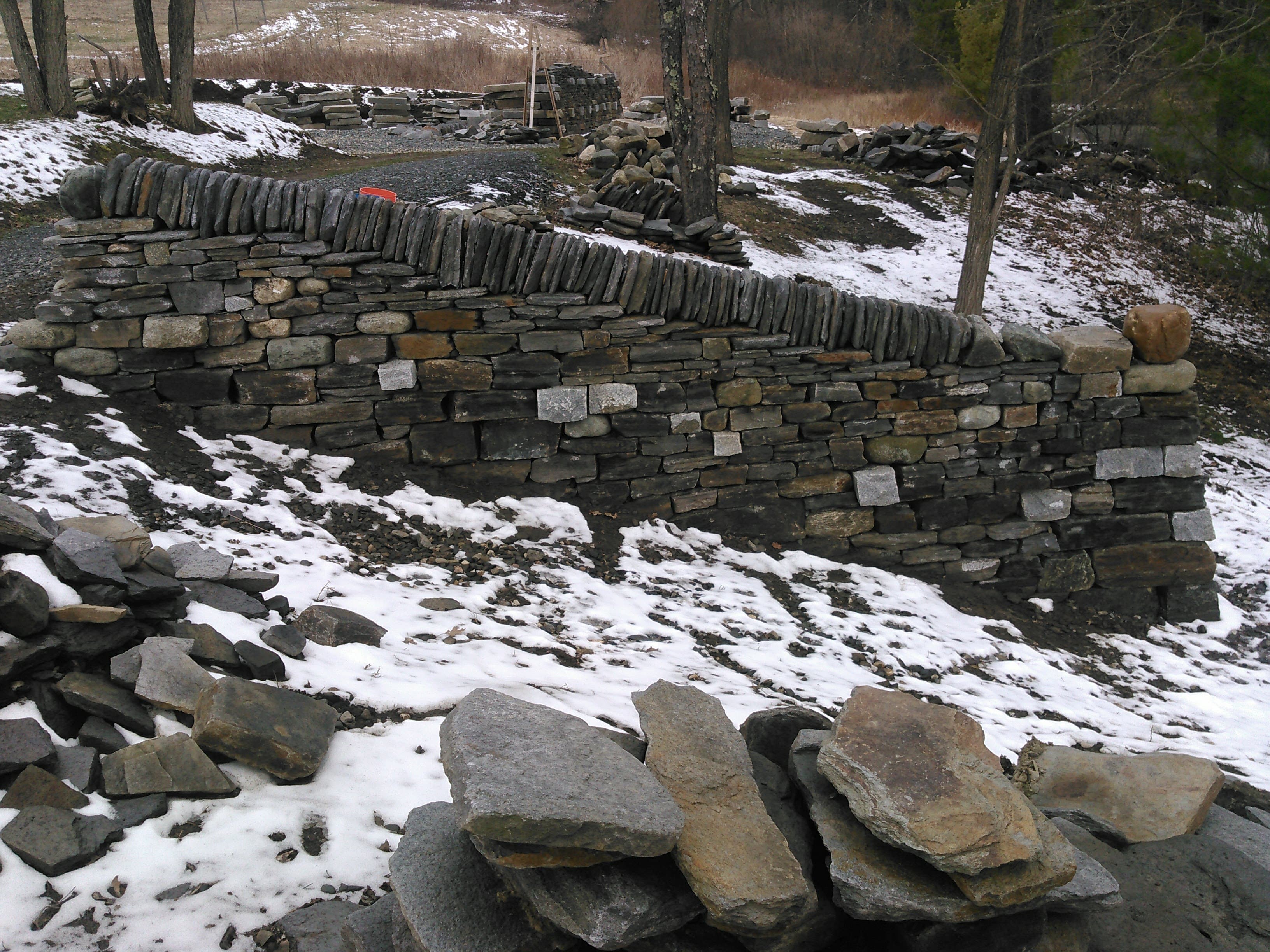
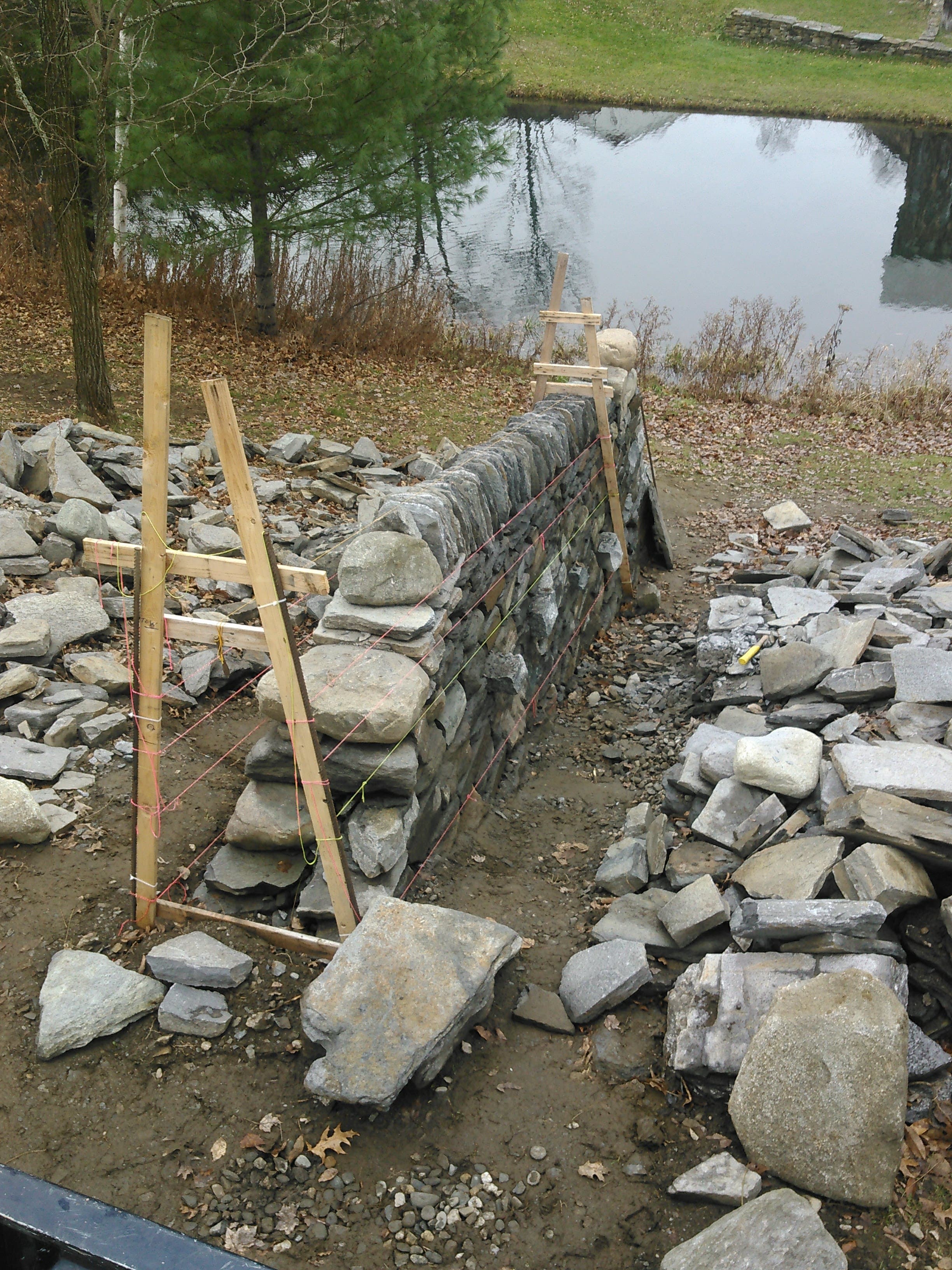
A visual guide to the sequence of a dry stone wall: line, batter, two faces, hearting, through stones, and coping.
A freestanding wall begins with line, grade, access, and a clear decision about what the wall is doing in the landscape. The build is not a stone face laid in place; it is a complete structure rising from the ground.
Every later choice depends on that first layout: where the wall turns, how it climbs, how much batter it carries, and where the largest stones can do the most work.
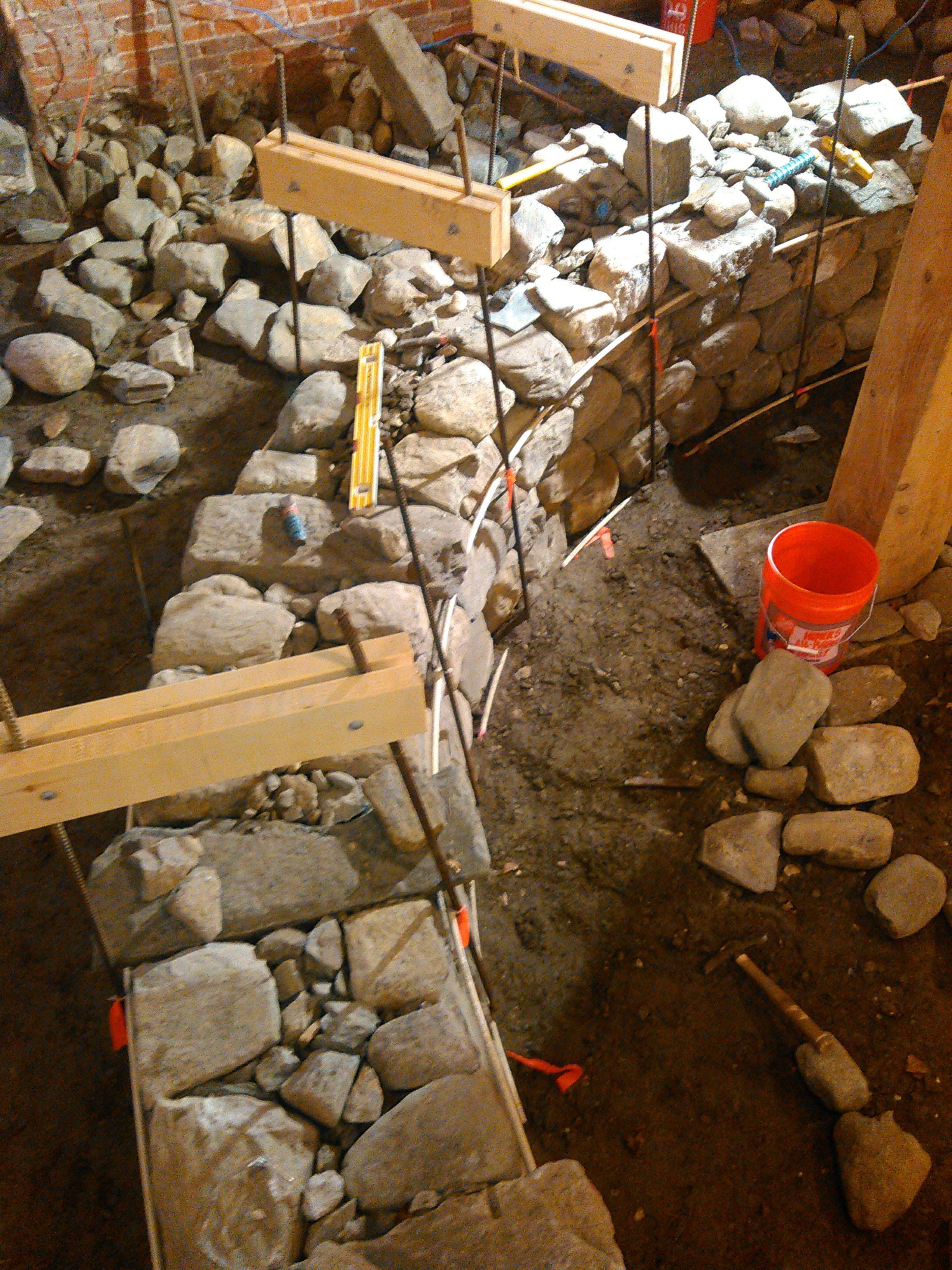
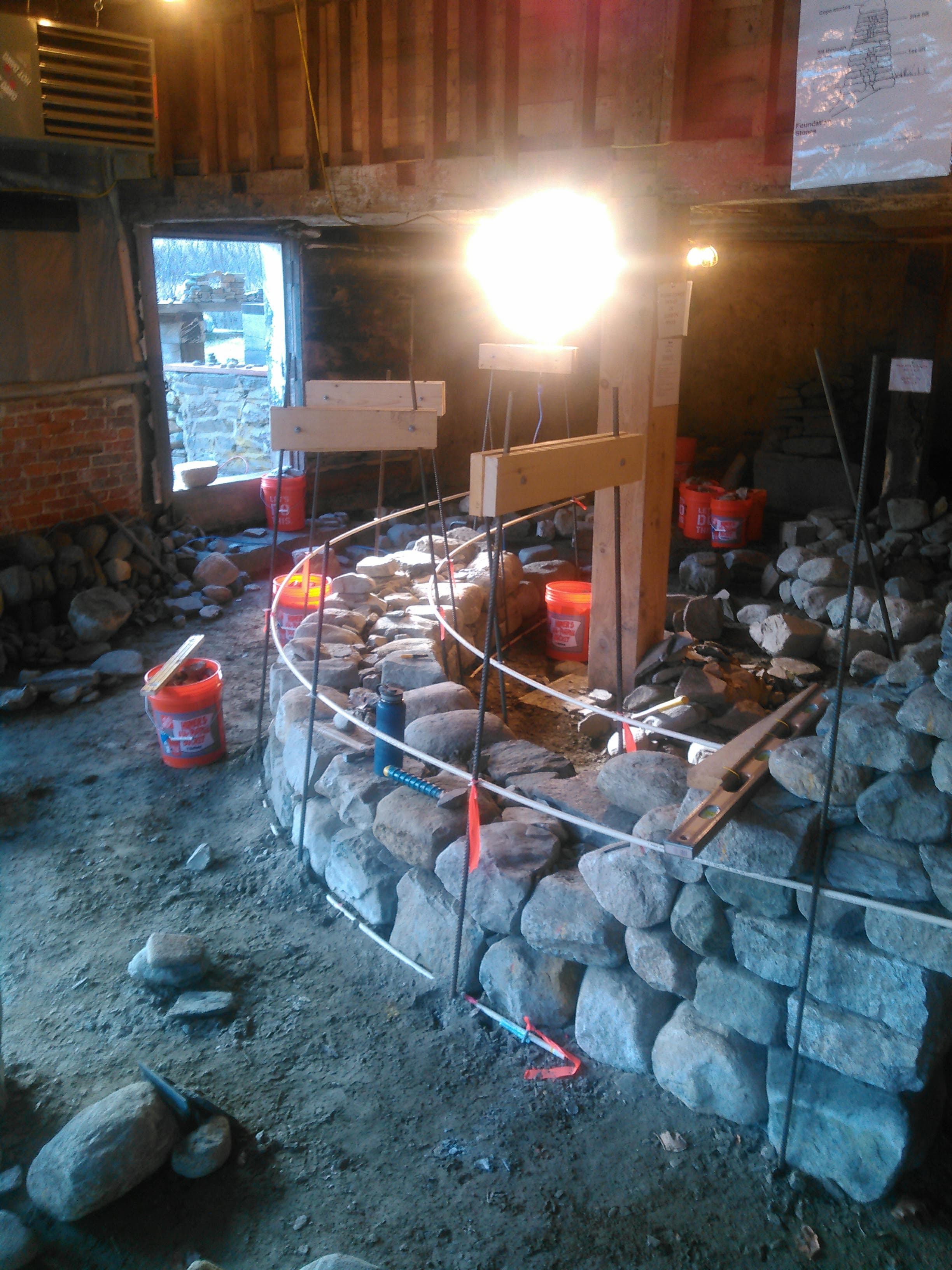
The faces rise together. Stones are set with length into the wall, joints are covered, and the core is packed from the inside as the work goes up.
Hearting is not leftover rubble. It is small stone placed tightly enough to keep the two faces working as one mass.
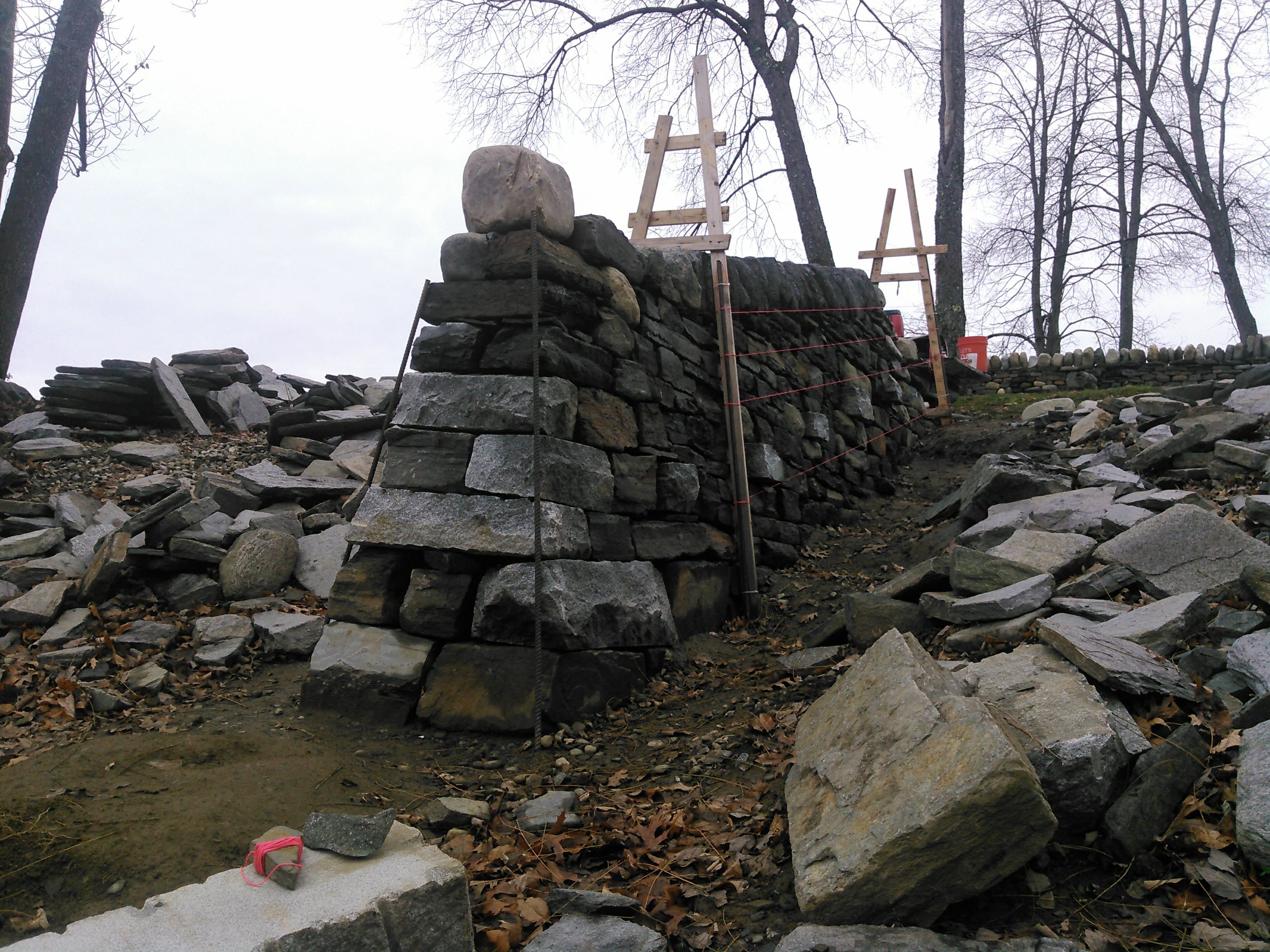
Coping is not only a visual finish. It weights the wall, protects the upper courses, and declares whether the work below is straight, curved, level, or climbing.
A good wall should make its construction legible after the tools are gone: the line, the batter, the covered joints, and the patient fit of one stone against the next.