
A retaining wall is a freestanding wall, buried
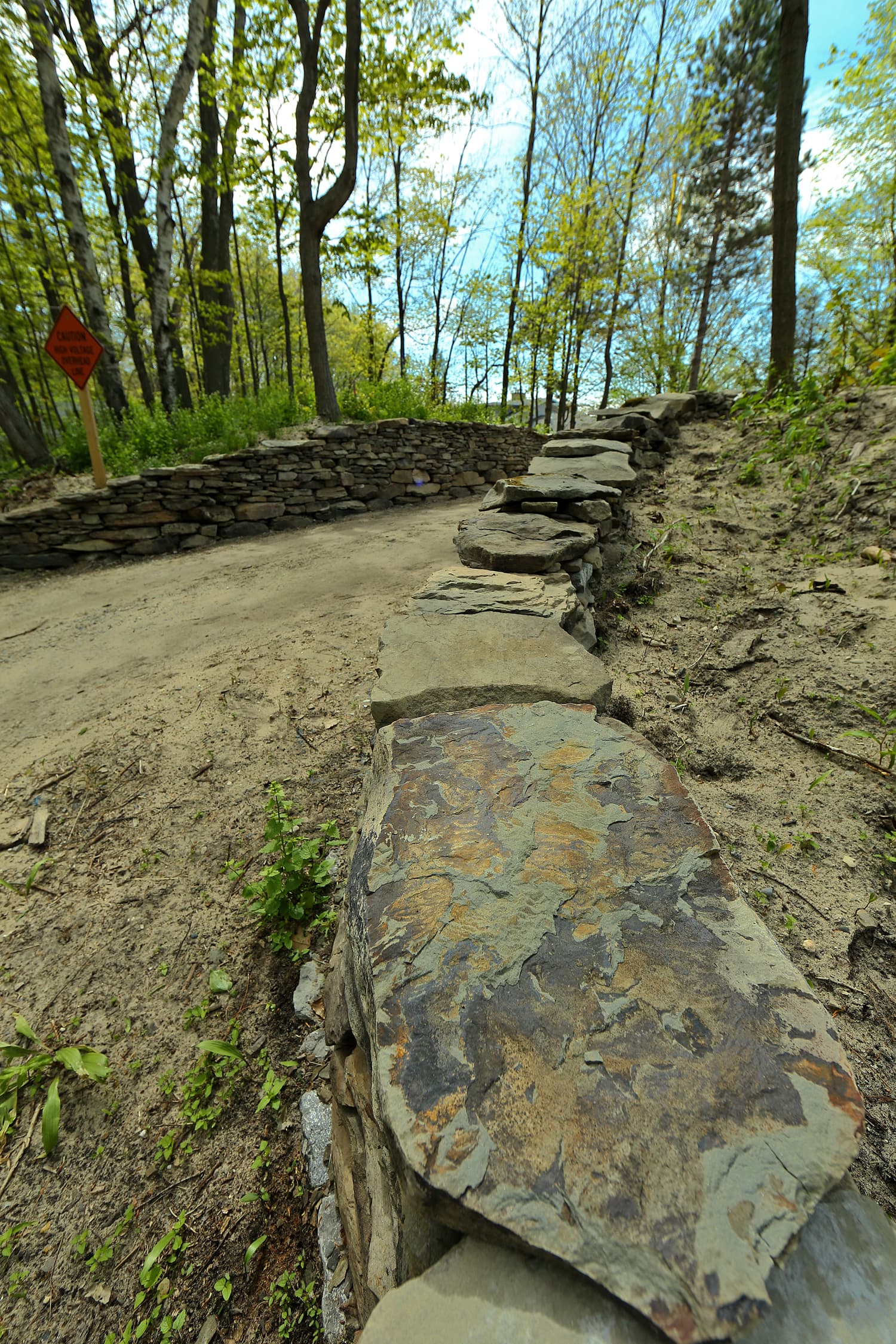
The most common structural error in dry stone retaining work is treating the bank as the missing half of the wall.
It is common to see a stone face laid against earth and called retaining work. The reasoning is intuitive and completely wrong: if the bank is already there, why build a second face?
Because the bank moves. When the wall has no back face of its own to lock against the front, it moves with the bank instead of holding it.
A proper dry stone retaining wall is built freestanding throughout. Both faces are laid, both are battered, both are tied, and the hearting between them does the same work it does in a freestanding boundary wall.
The buried face can be rougher because no one will see it, but it still exists. That is the whole correction.
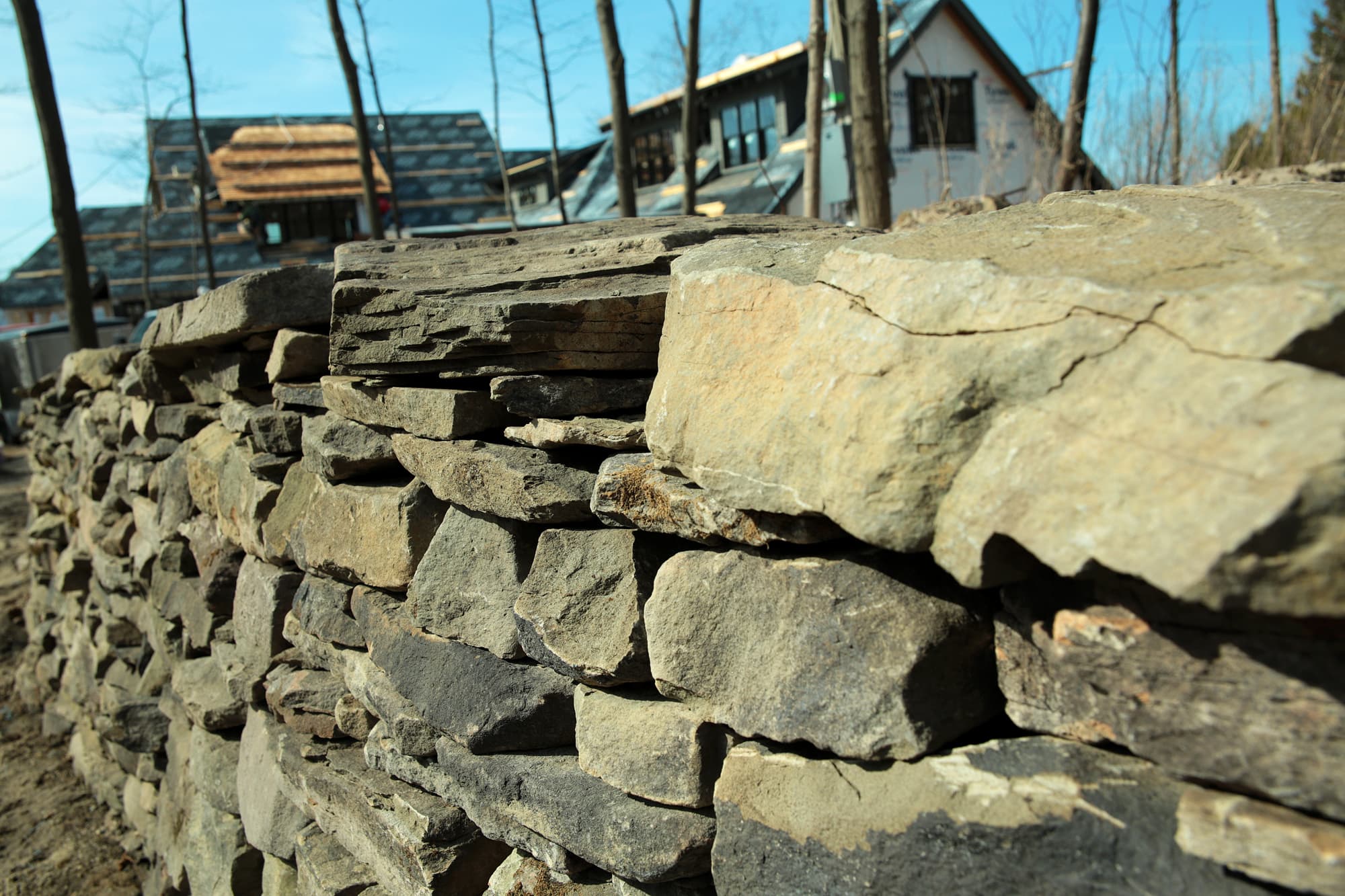
Behind the buried face goes crushed aggregate, not random fill and not a sealed membrane. Hydrostatic pressure moves walls, and water trapped behind stone is one of the quickest ways to make that pressure.